

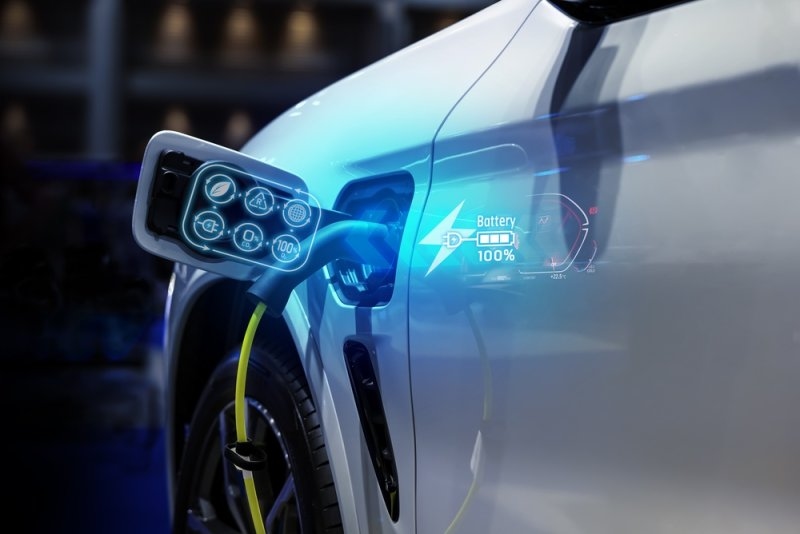
EV charging tech is completely changing how drivers juggle their time, energy costs, and daily routines. Charging isn’t just about plugging in—it’s now a mix of power, battery care, grid smarts, and smart software. The best systems help you fill up at home, find public chargers quickly, and avoid long waits.
Quicker charging sounds great, but it’s not the whole answer. Battery health, electricity costs, your car’s design, and how you charge all matter too. In this blog, we break down how EV charging works, compare different charging options, look into smart charging, and show how all these changes are making electric driving way more practical.
EV charging technology imparts electrical power to a vehicle's battery, controls voltage, current, and temperature, and applies limits to the charging.
When an EV driver plugs it in, this EV charger and EV communicate with each other to create a safe charging session. It not only validates compatibility but also regulates power delivery and even prohibits charging or alters the pace if necessary.
During AC charging, the car's power bank stores direct current that is produced by the onboard charger, which is powered by alternating current provided by the charging source. DC fast chargers do this conversion at the point of charge—bringing electricity right to the battery.
Chief among those distinctions is speed.
New EV charging systems minimize energy loss through energy management, thermal controls, and charging plans. Losses occur during conversion and in batteries, charging and cooling, etc.
Use scheduled home charging, avoid using unnecessary rapid charging, and use charging at suitable temperatures to enhance the efficiency of the site as a practical technique for drivers. The vehicle has its own battery-management system that ensures battery health is maintained by regulating battery power.
Don't Miss: Top Self-Driving Cars In 2026 and What Buyers Must Know
There are various EV charging options to cater to different trips, whether it's a long journey or living within reach of home charging.
Charging in the U.S. is typically divided into Level 1 charging, Level 2 charging, and DC fast charging. Climbers may use different ranges of power and typical uses.
| Charging type | Typical power | Best use | General charging experience |
|---|---|---|---|
| Level 1 | Around 1–2 kW | Overnight or low-mileage home use | Slow |
| Level 2 | Around 3–19 kW for common installations | Homes, workplaces, public parking | Moderate |
| DC fast charging | Often 50–350 kW | Highway trips and quick top-ups | Fast, vehicle-dependent |
Actual power is dependent on equipment and vehicle. If a car is hooked up to a high-power station, it can only be charged at rates that are supported by the car.
Most Level 1 uses a standard home outlet, making them accessible but slow. For these drivers, who haul long distances daily, the typical solution is a Level 2 solution, which is more powerful.
When time is of the essence, like on a road trip, you'll want to get a DC fast charge. On the other hand, the charging speed typically decreases as the battery level increases, especially at higher charge levels. 350kW is 350kW in one station; not every vehicle will get 350kW.
When it comes to AC vs DC charging, it depends on where and how much electricity can be transferred to the vehicle.
The installation of the EV charging depends on various factors that are interrelated. While the number of watts a station can handle is important, it is just part of the solution. The rate can be restricted by battery temperature, charge level, vehicle design, and electrical supplies.
For instance, taking on 150 kW in a vehicle might charge a lot slower if the battery is cool or full. If supported, the battery could be pre-conditioned before stopping for rapid charging, which would aid charging performance.
Key factors include:
The charging time is determined by the amount of energy that needs to be added, the power that is delivered, and the losses incurred during the charging process. Equipped with an appropriate “fast” charger, a small top-up charge can be delivered in minutes; for some vehicles, a top-up function may only take a bit more than a day if Level 1 charging is used.
Suppose that a car has a 60 kWh battery and the required battery energy is 30 kWh. With 7 kW power provided consistently, it turns out that that's approximately 4.3 hours before factoring in all the losses and fluctuations in charging rate. Actual times may be extended.
EV charging connector types define the types of vehicles that are suitable to plug directly into the charging station or if a compatible vehicle charger is required. There are major differences between the main connector standards for AC and DC charging, but compatibility between vehicle and station has been made easier to manage.
| Connector | Typical use | Key detail |
|---|---|---|
| J1772 | AC charging | Common on many non-Tesla vehicles |
| CCS1 | DC fast charging | Combines AC and DC charging contacts |
| NACS | AC and DC charging | Tesla-developed connector now adopted by other automakers |
| CHAdeMO | DC fast charging | Found on some older EV models |
Before travelling, drivers must determine that their cars will have access to charging stations and the networks where they will keep them. Adapters might require assistance, but not where the vehicle, connector, and charging scenario are not permitted.
Smart EV charging technology employs software, connected charging stations, and electricity data to regulate the timing and method of vehicle charging.
Plugs can be smartly charged to charge at peak off times or at times when energy demand is low or renewable energy is available. Some systems also equalize the power between multiple vehicles, avoiding overloading a building's electrical system.
A company may schedule the time that all its 20 EVs are plugged in, for instance. The site reduces peak demand whilst drivers get the energy they need.
Smart charging can also help to assist utility demand response programs if they exist. Savings will vary based on rates, program length, and drivers' schedules.
Both net charging and speed are important in charge efficiency. Under certain circumstances, high power charging can cause battery stress when paired with high temperatures, particularly when frequent fast charging occurs.
When driving a car between runs, use the automaker's recommended charging procedure and do not leave the battery at a "full charge" for more than recommended by the manufacturer. No one-size-fits-all solution exists for all EVs.
Also Read: Hybrid Car Maintenance Tips for Long Life and Lower Costs
Right now, EV charging is evolving fast, with speedier charging, smarter energy management, and better battery controls. Level 2 charging fits most daily routines, while DC fast charging is perfect for road trips. But not every option fits every driver. Think about your car, local electricity rates, battery temperature, and how easy it is to access charging—the right setup depends on your needs.
Smart charging is another game-changer, shifting demand to off-peak times and saving you money. As networks and onboard systems improve, you can spend less time worrying about charging and more time behind the wheel. The real win isn’t just faster charging but charging that slips easily into everyday life.
Most home and public chargers stop working if there’s an outage—they need electricity, after all. But some EVs and special two-way chargers can act as backup power if you set them up right.
Charging gear is built for the outdoors and should handle normal rain just fine, as long as it’s installed and used correctly. Just don’t use any damaged cables or connectors, and always follow the safety instructions.
Absolutely—overnight charging with the right setup is fine for most people. You don’t need to run your battery all the way down before plugging in again.
Using the AC or heater while charging does use more energy, especially in very hot or cold weather. Some cars can pre-cool or pre-heat the cabin while still plugged in, so the battery isn’t drained before you even hit the road.
Wireless charging transfers energy through pads beneath your car and the parking space. It’s cool tech, but still pretty rare. Cost, setup, and car compatibility all play a part in how fast it spreads. For now, most drivers stick with plugs.
This content was created by AI